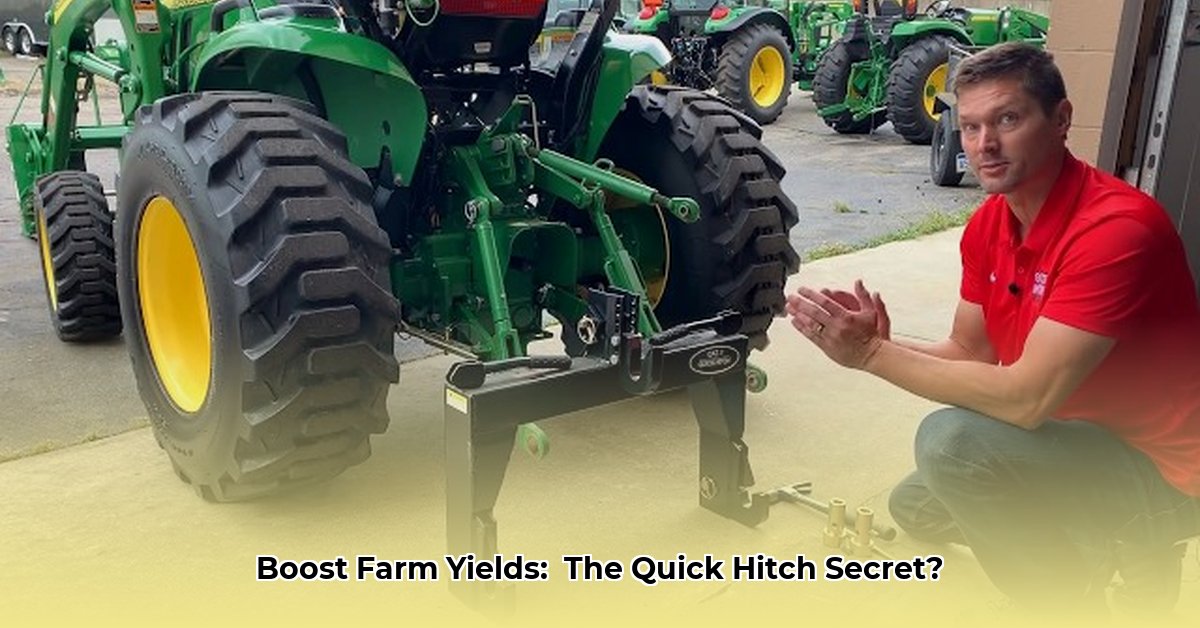
Understanding Quick Hitches: A Time-Saving Solution for Sustainable Agriculture
Switching tractor implements can be time-consuming and inefficient. Quick hitches offer a solution, significantly boosting farm efficiency and reducing labor costs. This comprehensive guide provides actionable intelligence to help you select, install, maintain, and safely utilize quick hitches for sustainable farming practices. We'll cover various hitch types, selection criteria, installation procedures, maintenance schedules, and a cost-benefit analysis. We'll also explore the environmental considerations surrounding quick hitch use. For great tractor deals, check out tractor packages.
Types of Quick Hitches: Category I, II, and III
Quick hitches are categorized by size and compatibility with your tractor’s three-point hitch (the system connecting implements to the tractor). The three main categories are:
- Category I: Suitable for smaller tractors and lighter implements.
- Category II: A mid-range category accommodating a wider range of tractor and implement sizes.
- Category III: Designed for larger tractors and heavier-duty implements.
Adapters: These crucial components allow you to connect implements of one category to a tractor with a different category hitch, increasing implement flexibility and reducing the need for multiple hitches. Choosing the correct category and utilizing adapters when necessary is vital for avoiding damage and ensuring safe operation.
Selecting the Right Quick Hitch: A Step-by-Step Guide
Choosing the right quick hitch is crucial for optimal performance and safety. Follow this process:
- Identify your tractor's three-point hitch category: Consult your tractor's manual to determine its hitch category (I, II, or III).
- Inventory your implements: List all implements you will use with the quick hitch, noting their weight and hitch category requirements.
- Consider your tractor's horsepower: Higher horsepower tractors may require heavier-duty hitches capable of handling greater stress.
- Determine your budget: While the initial investment is important, focus on long-term savings in labor, fuel, and increased efficiency.
- Verify compatibility: Before purchasing, ensure the chosen hitch is fully compatible with both your tractor and all your implements. Confirm the hitch's weight capacity exceeds the heaviest implement you'll use.
Installation and Safe Usage of Quick Hitches: A Practical Approach
Installation varies slightly by manufacturer, so always consult your hitch's manual. However, these general steps and safety precautions apply:
Installation:
- Securely attach the hitch to your tractor's three-point hitch, following the manufacturer's instructions precisely.
- Connect the implement to the hitch, ensuring a tight and secure fit. No play or looseness should be present.
- Engage the hitch's locking mechanism. This crucial safety step prevents accidental disconnections.
Safe Usage:
- Never work under a raised implement. This is a fundamental safety rule.
- Always disengage the power take-off (PTO) shaft before changing implements. Rotating equipment poses serious danger.
- Use appropriate safety gear, including gloves and eye protection.
Maintaining Your Quick Hitch: Preventing Failures and Extending Lifespan
Regular maintenance is essential for preventing failures and maximizing the lifespan of your quick hitch.
- Regular Inspections (monthly): Carefully inspect pins, bushings, hydraulic lines, and locking mechanisms for wear and tear, paying close attention to any potential leaks.
- Lubrication (as needed): Keep moving parts lubricated using the manufacturer's recommended lubricant to minimize friction and wear.
- Cleaning (after each use): Clean the hitch to prevent corrosion and buildup of mud or debris, especially after working in wet conditions.
Troubleshooting typically involves checking connections, identifying worn parts, or addressing hydraulic leaks. Consult your manual, and if needed, contact a qualified mechanic. Early attention to minor problems prevents major repairs.
Cost-Benefit Analysis: Weighing Initial Investment Against Long-Term Savings
While the initial cost of a quick hitch can be significant, the long-term benefits often outweigh the investment. The time saved in changing implements translates directly to increased field time, potentially leading to considerably higher yields. Reduced fuel consumption, due to more efficient operation, adds to the overall savings. However, a detailed cost-benefit analysis, factoring in labor costs, fuel savings, and implement longevity, should be conducted for your specific farming operation.
Sustainability Considerations: Minimizing the Environmental Footprint
While quick hitches offer clear efficiency gains, considering their environmental impact is crucial for sustainable farming practices. Future research should focus on:
- Sustainable manufacturing processes: Utilizing recycled materials and minimizing waste during production.
- Environmentally friendly materials: Exploring the use of sustainable materials with reduced environmental impact throughout the hitch's lifecycle.
- End-of-life management: Developing effective recycling or disposal methods to minimize landfill waste.
Although data is currently limited, the efficiency gains potentially leading to reduced fuel consumption are an area of promising research.
Conclusion: Optimizing Farm Operations for Efficiency and Sustainability
Quick hitches are a valuable investment for farmers focused on efficiency and sustainability. Proper selection, installation, and maintenance ensure optimal performance and enhance safety. Remember to prioritize safety during all operations and keep abreast of research regarding environmental impacts. By embracing modern tools like quick hitches, farmers can improve productivity and contribute to a more sustainable agricultural future.